30 Days of Social Media Content Ideas for Digital Product Creators
Stop staring at a blank screen. Get 30 days of ready-to-use social media content ideas to promote your digital products on Instagram, TikTok, Pinterest & Facebook.

You created the product. Poured hours into your course, template, ebook, or digital download. Now you're supposed to promote it on social media. Every. Single. Day. Forever.
If you've ever sat staring at a blank caption box thinking "what am I supposed to post today?"—you're not alone. Most digital product creators struggle with the same problem: they're experts at making great products, not churning out endless social media content.
The good news? You don't need to reinvent the wheel every day. This guide gives you 30 days of ready-to-use content ideas that work across Instagram, TikTok, Pinterest, and Facebook. Each idea is designed specifically for digital product creators—whether you sell courses, templates, ebooks, printables, or any other digital goods.
What you'll get:
- A proven 5-pillar content framework
- 30 specific post ideas organized by week
- Platform-specific adaptation tips
- A system to stay consistent without burning out
Let's fill your content calendar.
Why Consistent Posting Actually Matters for Digital Product Sales
Before we dive into the content ideas, let's talk about why this matters:
The Algorithm Reality: Every major platform—Instagram, TikTok, Pinterest, Facebook—rewards consistency. Accounts that post regularly get more visibility. Accounts that disappear for weeks get buried. It's that simple.
The Trust Factor: Your audience needs to see you repeatedly before they buy. Marketing research suggests people need 7+ touchpoints with a brand before purchasing. Each post is a touchpoint. If you only post when you "feel like it," you're leaving money on the table.
The Compound Effect: One viral post is nice. But consistent posting compounds over time. A steady stream of content builds an audience that's primed to buy when you launch—rather than starting from zero every time.
The problem isn't motivation. It's knowing what to post. That's what this content calendar solves.
The 5 Content Pillars for Digital Product Creators
Every successful content strategy balances multiple content types. We call these "pillars"—the foundation your content calendar stands on.
Master these five pillars, and you'll never run out of ideas:
Pillar 1: Product Showcases (Direct Promotion)
This is your bread and butter—actually showing and talking about what you sell.
What it includes:
- Product walkthroughs and demos
- Feature highlights
- "What's included" breakdowns
- Launch announcements
- Limited-time offers
Why it works: People can't buy what they don't know exists. You need to directly promote your product, but strategically—not every post.
How often: 20-25% of your content
Learning from AI Influencers:
AI influencers have mastered the art of consistent, engaging content. Our guide to how AI influencers make money shows how they balance product showcases, behind-the-scenes, education, and engagement—strategies you can apply to your own content calendar.
Pillar 2: Behind-the-Scenes (Connection Building)
Pull back the curtain and show the human behind the product.
What it includes:
- Your creation process
- Your story and journey
- Day-in-the-life content
- Workspace tours
- Mistakes and lessons learned
Why it works: People buy from people they trust. BTS content builds that parasocial relationship that turns followers into customers.
How often: 15-20% of your content
Pillar 3: Education (Authority Building)
Teach something valuable related to your product's topic.
What it includes:
- Tips and tutorials
- How-to guides
- Common mistakes to avoid
- Industry insights
- Quick wins your audience can implement
Why it works: Free value proves your expertise. If your free content is good, people assume your paid content is even better.
How often: 30-35% of your content
Pillar 4: Social Proof (Trust Building)
Let your customers do the talking.
What it includes:
- Testimonials and reviews
- Customer results and transformations
- DM screenshots (with permission)
- Sales notifications
- User-generated content
Why it works: Third-party validation is more convincing than anything you can say about yourself.
How often: 15-20% of your content
Pillar 5: Engagement (Algorithm Boosting)
Content designed to spark conversation and interaction.
What it includes:
- Questions and polls
- Hot takes and opinions
- Relatable content and memes
- "This or that" posts
- Trend participation
Why it works: Comments and shares signal to algorithms that your content is valuable, which increases your reach on future posts.
How often: 10-15% of your content
Now let's put these pillars into action with 30 specific content ideas.
30 Days of Content Ideas: The Full Calendar
Week 1: Introduction & Value
Start strong by introducing your product and establishing your value.
| Day | Pillar | Content Idea |
|---|---|---|
| 1 | Product Showcase | "Here's what's inside [product name]" — Create a carousel or video walking through exactly what customers get. Show the files, modules, templates, or pages. Make the value tangible. |
| 2 | Education | Quick tip related to your product's topic — Share one actionable piece of advice your audience can use today. If you sell Notion templates, share a Notion tip. If you sell fitness guides, share a workout tip. |
| 3 | Behind-the-Scenes | "Why I created this product" — Tell the origin story. What problem were you solving? What frustrated you enough to build this? Personal stories connect. |
| 4 | Engagement | Poll: "What's your biggest struggle with [topic]?" — Ask a question directly related to the problem your product solves. Great for market research AND engagement. |
| 5 | Social Proof | Share a testimonial or DM screenshot — If you have happy customers, show their words. If you're new, share feedback from beta testers or friends who tried it. |
| 6 | Education | "3 mistakes people make with [topic]" — Position yourself as the expert by calling out common errors. Bonus: your product can be the solution to these mistakes. |
| 7 | Product Showcase | Feature ONE specific benefit with a real example — Don't try to sell everything at once. Pick one feature and go deep. Show exactly how it helps. |
Week 2: Going Deeper
Build on Week 1 by adding more depth and variety.
| Day | Pillar | Content Idea |
|---|---|---|
| 8 | Behind-the-Scenes | "How I use my own product" — Show yourself actually using what you sell. Screen recordings, photos, real examples. This proves you believe in it. |
| 9 | Education | Mini-tutorial: solve a small problem — Pick a pain point your audience has and walk them through a solution. This should be genuinely useful on its own. |
| 10 | Engagement | "Unpopular opinion about [your niche]" — Share a take that might be controversial. Hot takes get engagement. Just don't be inflammatory for its own sake. |
| 11 | Social Proof | Before/after from a customer — Transformation content is incredibly powerful. Show the result someone achieved using your product. |
| 12 | Product Showcase | "This is for you if..." — Create a post that clearly calls out your ideal customer. List the specific situations, struggles, or goals that make someone perfect for your product. |
| 13 | Education | Myth-busting post about your niche — "You don't actually need X to do Y" or "The truth about [common belief]." Challenge assumptions. |
| 14 | Engagement | "Ask me anything about [topic]" — Open up for questions. Great for Stories, Lives, or regular posts. Answer the best questions in follow-up content. |
Week 3: Building Trust
Focus on deepening trust and showcasing more social proof.
| Day | Pillar | Content Idea |
|---|---|---|
| 15 | Behind-the-Scenes | Your journey/credentials — Why are you qualified to sell this? Share your experience, results, or backstory. Not bragging—just context. |
| 16 | Product Showcase | Comparison: with vs. without your product — Show the contrast. What does life/work look like before using your product? And after? Make the difference visual. |
| 17 | Social Proof | Compile 3-5 testimonials into one post — Create a testimonial carousel or compilation video. Volume of proof is persuasive. |
| 18 | Education | "The [topic] checklist I wish I had" — Share a checklist format post. Checklists are saved, shared, and referenced—great for reach. |
| 19 | Engagement | "What would you do?" scenario post — Present a situation your audience can relate to and ask for their input. Gets people commenting with opinions. |
| 20 | Behind-the-Scenes | Sneak peek of something you're working on — Give a preview of an update, bonus, or new product. Creates anticipation. |
| 21 | Product Showcase | Limited-time offer or bonus announcement — Create urgency. Even without a sale, you can offer a bonus for people who buy this week. |
Week 4: Urgency & Momentum
Close the month strong with urgency and reinforcement.
| Day | Pillar | Content Idea |
|---|---|---|
| 22 | Education | "The #1 thing that changed my [topic] results" — Share your biggest insight or breakthrough. Personal stories + actionable advice = high engagement. |
| 23 | Social Proof | Share a detailed customer success story — Go deeper than a quote. Tell the full story: where they started, what they did, what happened. |
| 24 | Product Showcase | FAQ: answer common objections — Address the questions people ask before buying. "Is this right for beginners?" "How long does it take?" Turn objections into content. |
| 25 | Engagement | Relatable meme or "caption this" — Not everything needs to be serious. A well-timed meme related to your niche shows personality and gets shares. |
| 26 | Behind-the-Scenes | "A day in my life as a [creator type]" — Document a regular day. These perform well across all platforms, especially video-first ones like TikTok. |
| 27 | Education | Resource roundup — Share your favorite tools, products, or resources (including your own). Positions you as a helpful curator, not just a seller. |
| 28 | Product Showcase | "Last chance" or reminder post — If you had a limited offer, remind people. If not, simply remind them your product exists and why it helps. |
| 29 | Social Proof | Screenshot of recent sales or download numbers — "Just hit 500 sales!" or "100 people grabbed this template this week." Social proof through numbers. |
| 30 | Engagement | Celebrate a milestone, thank your audience — Month end is a great time to show gratitude. Thank your followers and customers. Celebrate wins together. |
How to Adapt These Ideas for Each Platform
The same content idea can work on every platform—you just need to adjust the format. Here's how:
Pinterest is a visual search engine. People come here to discover and save ideas.
Format focus:
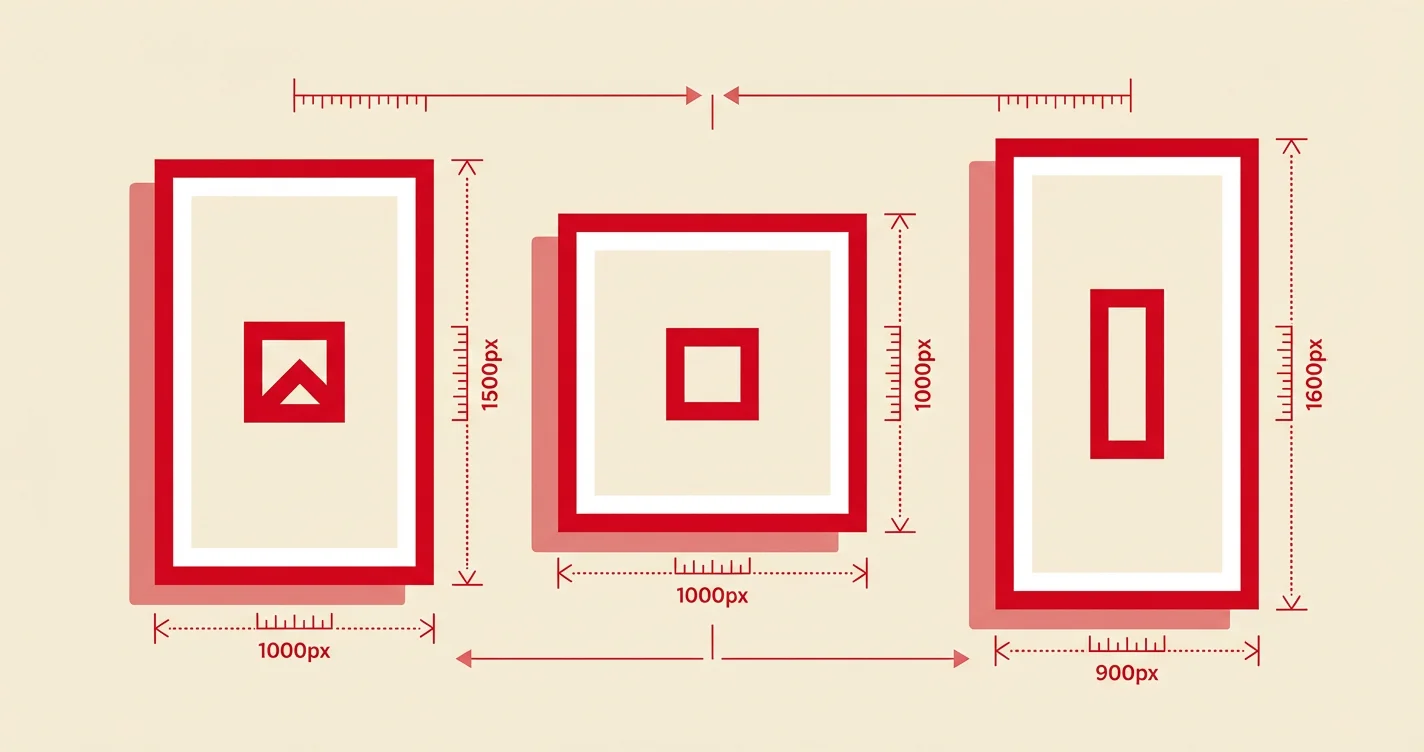
- Vertical images (1000 x 1500px ideal)
- Text overlay with clear headlines
- Link directly to product pages
- Multiple pin variations per idea
Best content types:
- Educational tips (infographic style)
- Product showcases with lifestyle imagery
- "How-to" pins that solve problems
- Resource lists and compilations
Posting frequency: 5-15 pins per day
Pro tip: Avoid vague board names—use keyword-rich board names that help your content get discovered in search. If you're selling on Etsy, check out our guide to top items to sell on Etsy to find the most profitable product categories to promote.
Instagram rewards visual polish and personality. It's where your audience builds a relationship with you.
Format focus:
- Carousels for educational content (higher saves)
- Reels for discoverability (algorithm priority)
- Stories for daily connection and polls
- Feed posts for polished product content
Best content types:
- Behind-the-scenes Reels
- Carousel tutorials and tips
- Testimonial graphics
- Product demos (Reels or carousel)
Posting frequency: 3-7 feed posts per week + daily Stories
Pro tip: Reels get pushed to non-followers, making them your best growth tool. Repurpose TikTok content here.
TikTok
TikTok rewards authenticity and entertainment. Perfect content doesn't perform—relatable content does.
Format focus:
- Short-form vertical video (15-60 seconds ideal)
- Trending sounds and formats
- Quick cuts and movement
- Talk directly to camera
Best content types:
- "Day in my life" content
- Quick tips delivered conversationally
- Product reveals with trending audio
- "POV" and relatable scenarios
- Response videos to comments
Posting frequency: 1-3 videos per day for growth
Pro tip: TikTok's algorithm gives every video a chance. Post consistently and let the algorithm find your audience.
Facebook is best for community and longer-form content. Groups are particularly powerful for digital product creators.
Format focus:
- Longer captions are okay (more context works here)
- Native video performs well
- Group posts get more organic reach than pages
- Stories for personal content
Best content types:
- Testimonials and success stories
- Detailed behind-the-scenes posts
- Live videos for Q&A
- Educational content with depth
- Group discussions and community posts
Posting frequency: 1-2 posts per day on Pages, more in Groups
Pro tip: If you have a Facebook Group, that's your highest-value Facebook asset. Post there first.
How to Stay Consistent Without Burning Out
Having 30 content ideas is great. Actually executing them for months on end is the hard part. Here's how to make it sustainable:
1. Batch Create Content
Don't create content every day. Set aside dedicated time to create in batches:
- Weekly batching: 2-3 hours once per week creates 7+ days of content
- Monthly batching: One focused day creates 30 days of content
- Quarterly sprints: A full day every 3 months creates 90 days of content
The more you batch, the less daily mental overhead you carry.
2. Repurpose Ruthlessly
One idea should become multiple pieces of content:
- A TikTok video → Instagram Reel → YouTube Short
- A carousel → LinkedIn post → Twitter thread → Pinterest pins
- A blog post → 10 social posts extracting key points
- A customer testimonial → Quote graphic, video review, case study
The 1:4 rule: Every piece of content you create should become at least 4 posts across platforms.
3. Use Templates
Design templates are a game-changer:
- Create 5-7 branded templates in Canva
- Swap out text and images for each post
- Maintain visual consistency without starting from scratch
Same concept applies to captions. Create fill-in-the-blank caption templates for each content pillar.
4. Automate Scheduling
Manual posting is not sustainable. Use scheduling tools to:
- Plan weeks of content in advance
- Post at optimal times automatically
- Maintain consistency even when you're busy
Not sure which scheduling tool to pick? Our Buffer vs Postiz comparison breaks down the two most popular options for 2026—helping you choose based on your needs and budget.
This is where tools like bengago help. Instead of manually creating each post variation and scheduling across platforms, you can automate the entire process—generate content from your product URLs, create multiple variations, and schedule them to go out at the best times.
What takes most creators 10-20 hours per week can take 2 hours or less.
Common Mistakes to Avoid
As you implement this content calendar, watch out for these pitfalls:
Mistake 1: Only Posting Product Promotions
If every post is "buy my thing," your audience will tune out. Follow the pillar percentages—product content should be 20-25% of your posts, not 80%.
Mistake 2: Inconsistent Posting
Posting 10 times one week then disappearing for a month is worse than posting twice a week consistently. Algorithms and audiences both reward reliability. For more on this, check out our guide on Pinterest marketing mistakes (the consistency lesson applies to all platforms).
Mistake 3: Ignoring Analytics
After 30 days, check what worked. Which posts got the most saves? Which drove clicks to your product? Which fell flat? Do more of what works, less of what doesn't. For Pinterest specifically, learn about common Pinterest marketing mistakes that can sabotage your results.
Mistake 4: Trying to Be Everywhere at Once
You don't need to master every platform immediately. Start with 1-2 platforms where your audience is. Get consistent there before expanding.
Mistake 5: Creating Everything Manually
Your time is valuable. Use templates, use AI tools, use batch creation. The goal isn't to spend all day on social media—it's to grow your digital product business.
Your Next Step: Start Today
You now have 30 days of content ideas and a framework to keep going beyond Day 30. The only thing left is to start.
Today's action:
- Choose 1-2 platforms to focus on
- Open Day 1's content idea
- Create and schedule your first post
Then do it again tomorrow. And the day after that.
Consistency beats perfection. A "good enough" post that goes live beats a perfect post that stays in your drafts.
Frequently Asked Questions
How often should I post to grow my digital product sales?
Consistency matters more than frequency, but here are general guidelines: Pinterest (5-15 pins/day), Instagram (3-7 posts/week + daily Stories), TikTok (1-3 videos/day), Facebook (1-2 posts/day). Start with what you can sustain, then increase as you build systems.
What if I don't have customer testimonials yet?
Start with what you have: feedback from beta testers, friends who tried it, or your own results using the product. You can also share "why I created this" content that positions the transformation your product provides. As sales come in, follow up and ask for testimonials.
Should I post the same content on every platform?
The same idea can work everywhere, but adapt the format. A 60-second TikTok video becomes an Instagram Reel with different captions, which becomes 5 Pinterest pins with different graphics, which becomes a Facebook post with more context. Same core message, different execution.
How do I know what's working?
Track these metrics monthly: reach/impressions (are people seeing your content?), engagement rate (are they interacting?), profile/link clicks (are they taking action?), and sales from social (are they buying?). Most platforms have built-in analytics. Review them monthly and double down on what works.
What if I run out of ideas after 30 days?
The 5 pillars are infinitely renewable. You can repeat the same types of content with new specifics. Share a new tip, a new testimonial, a new behind-the-scenes moment. Your audience won't remember every post—they'll remember the consistent presence.
Last Updated: January 10, 2026 Category: Social Media Marketing Reading Time: 14 minutes